Regulation of gene expression
When the signaling molecule passes through the cell membrane, it is directed to the nucleus, where the DNA is located, which contains the “instructions” for the body to become what it is. This provides a “genetic memory”. DNA segments are called genes. The expression (activity) of a gene is expressed in the fact that, according to the available instructions (individual DNA sequence), it produces proteins. Until recently, it was believed that genes are proteins. But it turned out that proteins are products of genes. Genes create proteins and are sections of DNA.
What you will learn in the article
- How a chemical signal reaches the nucleus and helps activate a gene for protein synthesis
- Why genes are described as DNA sections that create proteins rather than being proteins themselves
- How regulatory proteins read genes after the chromosome's protein shell is opened
- Why genes work in systemic interaction, with many genes switched on or off at the same time
- How epigenetics explains inherited changes in genetic activity without modifying the DNA sequence
Table of Contents
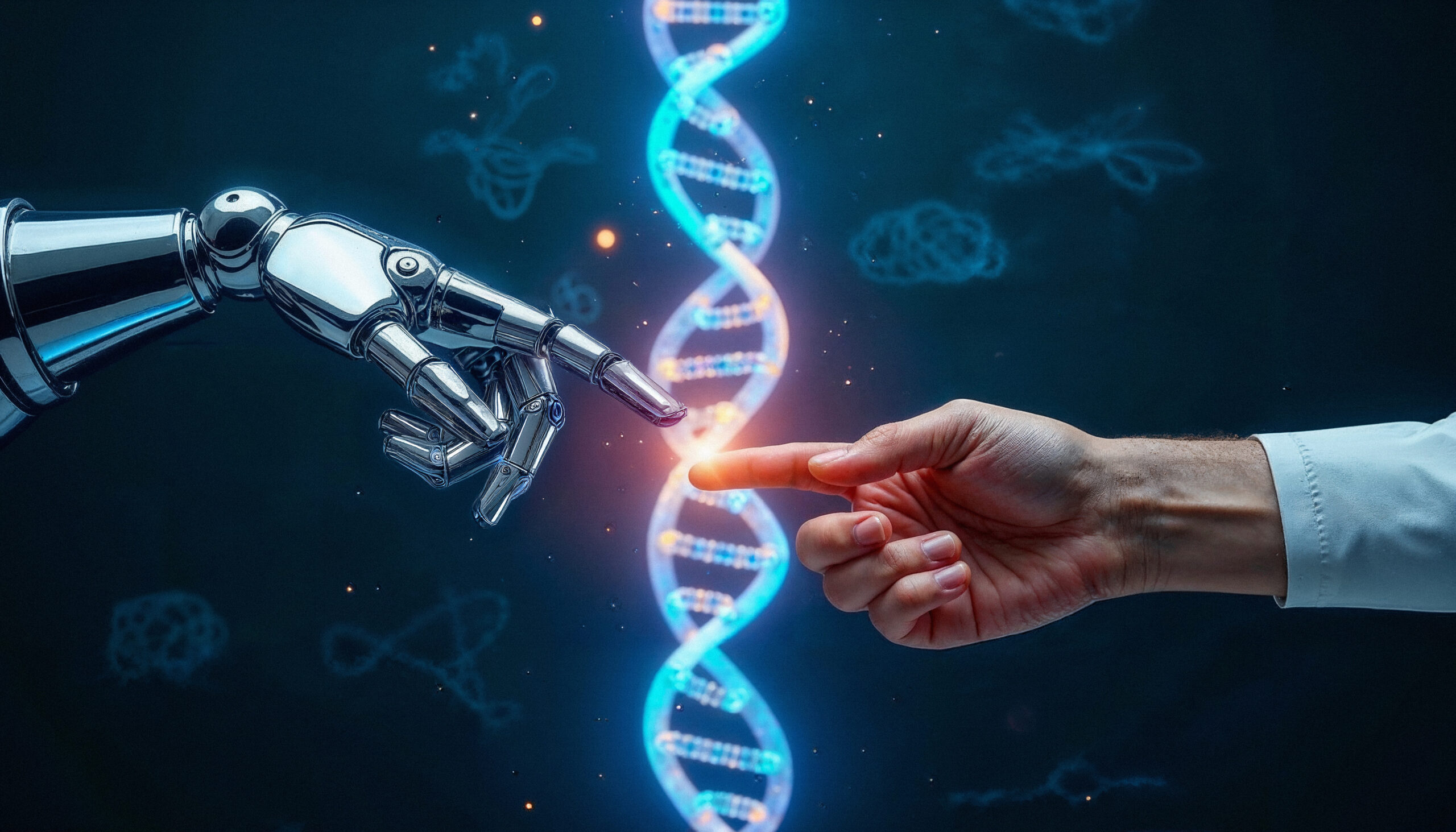
In order for the gene to activate and synthesize a protein, the chemical messenger’s signal must be translated into information that is understandable inside the cell. It searches the nucleus for the corresponding chromosome, a separate fragment of DNA twisted into a bundle. Each of these bundles is “dressed” in a “protein shell” that acts as a filter between the information contained in the DNA and the rest of the intracellular environment of the nucleus. To get to DNA, this shell needs to be “unwrapped”. Until this happens, the DNA remains latent. When the “shell” is removed, the regulatory protein reads the gene, as a result of which it becomes activated and RNA (ribonucleic acid) is synthesized, which leaves the cell nucleus to enter the new protein according to the code that it carries. Now, the protein created by the gene can influence many different aspects of cell life.
Genes work in systemic interaction with each other. At the same time, there are many “on” or “off” genes in a cell at any given time. The combination of “switched on” genes produces the entire variety of proteins. For any disease, there are one or two genes that have a major impact on its development. Then there’s a set of genes, maybe five to ten, with an average effect of 10 or 20 percent, and hundreds of genes with even less effect.
Most people share the misconception that fate is genetically determined, and if we have inherited genes that cause heart disease, diabetes, cancer, or any other diseases, then this is inevitable. These are outdated beliefs. There are no genes for depression or alcoholism, and not every health disorder is linked to a gene. And not everyone who inherits the genes associated with the disease will certainly get it. What matters is what action we can take to signal this gene to turn on or off. The instructions contained in DNA are not an immutable pattern that cells must follow throughout their lives.
This does not happen randomly. Genes can be activated or deactivated by both internal and external factors. Studies show that about 90% of genes are involved in interacting with signals from the external environment. A new science, epigenetics, is studying inherited changes in genetic activity that occur without modifying the DNA sequence. She explains how life experience and the environment affect the activity of genes.
So, new thoughts act through the activation of new neural networks, resulting in the production of other neuropeptides and hormones that epigenetically activate genes. When the DNA in a cell receives new information, it reacts by turning on some genes and turning off others. When a gene is activated, it produces the corresponding protein. When the gene is deactivated, it no longer produces enough proteins. Other genes are activated and new proteins are produced. And we are witnessing the consequences of this in the form of physical changes in our body.
Key takeaways
- Gene expression means that a gene produces proteins according to an individual DNA sequence
- Proteins are products of genes, while genes themselves are sections of DNA
- Many genes can have major, medium or small effects on disease development
- About 90% of genes are described as interacting with signals from the external environment
- New information can make DNA turn some genes on and others off, producing different proteins
Share:


Global health science — in clear language
We select and translate the best international publications. Read 3 key materials about longevity every week!
Published
June, 2024
Updated
Duration of reading
2-3 min
Category
Epigenetics
Share