Nervous and humoral regulation in the human body

In physiological regulation of the body, functions are carried out at an optimal level for normal performance, support homeostatic conditions with metabolic processes. Its purpose is to ensure that the organism is always adapted to changing environmental conditions.

Nervous and humoral regulation in the human body
In the human body, regulatory activity is represented by the following mechanisms:
  • nervous regulation;
  • humoral regulation.
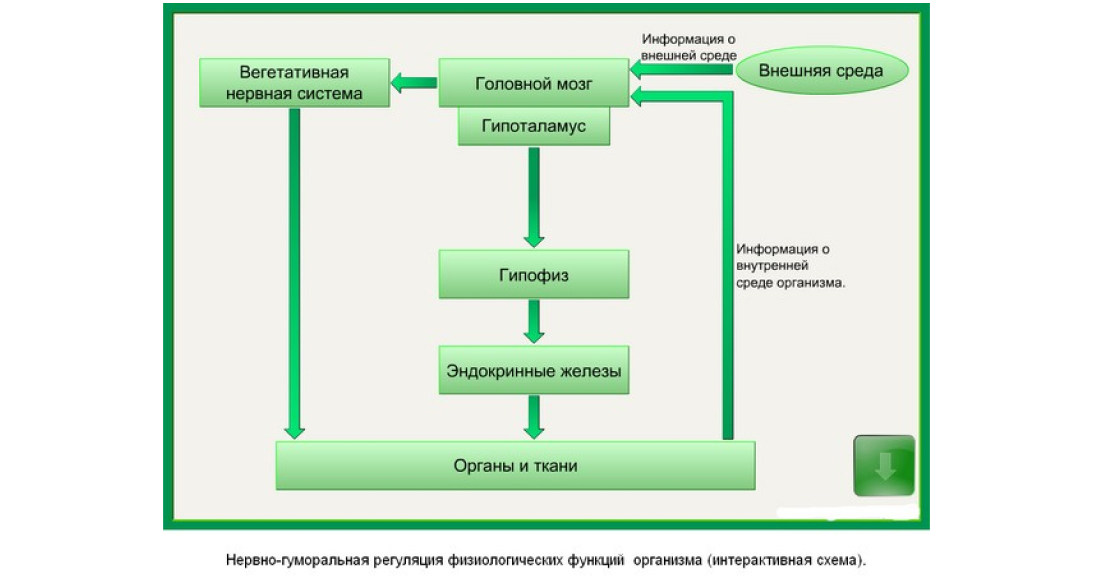
The work of nervous and humoral regulation is joint, they are closely related to each other. Chemical compounds, which carry out the regulation of the body, have an effect on neurons with a complete change in their state. Hormonal compounds secreted in the corresponding glands, also affect the NS. And the functions of the glands producing hormones are controlled by the NS, the importance of which in supporting the regulatory function for the organism is enormous. Humoral factor is a part of neuro-humoral regulation.

Don’t miss the most important science and health updates!

Subscribe to our newsletter and get the most important news straight to your inbox

Examples of regulation

An example of how the osmotic pressure of the blood changes when a person is thirsty will illustrate the regulation. This type of pressure increases due to a deficiency of moisture within the body. This leads to irritation of osmotic receptors. The resulting excitement is transmitted through the nerve pathways to the CNS. From it, many impulses get to the pituitary gland, stimulation occurs with the release of antidiuretic pituitary hormone into the bloodstream. In the bloodstream, the hormone penetrates to the curved renal tubules, increasing the reabsorption of moisture from the tubular ultrafiltrate (primary urine) back into the bloodstream. The result is a decrease in the urine excreted with water, and the body’s osmotic pressure, which has deviated from normal values, is restored.

Published

June, 2024

Duration of reading

About 3-4 minutes

Category

Brain and nervous system

Share

In case of excessive glucose level in the bloodstream, the nervous system stimulates the functions of the intro-secretory area of the endocrine organ producing insulin hormone. Already in the bloodstream the supply of insulin hormone increased, unnecessary glucose due to its influence goes to the liver, muscles in glycogen form. Increased physical work contributes to an increase in glucose consumption, in the bloodstream its volume decreases, there is an increase in adrenal function. Adrenal hormone transfers glycogen into glucose. Thus, nervous regulation, affecting intrasecretory glands, carries out stimulation or inhibition of the functions of important active biological compounds. Humoral regulation of vital functions of the organism, unlike nervous regulation, uses different fluid medium of the organism for information transfer. The transfer of signals is carried out with the help of chemical compounds:
  • hormonal;
  • mediatory;
  • electrolyte and many others.
Humoral regulation, as well as nervous regulation has some differences:
Differences:
  • No specific addressee. The flow of bioactive substances is delivered to different cells of the organism;
  • information is delivered at a low speed, which is comparable to the velocity of the flow of bioactive media: from 0.5-0.6 to 4.5-5 m/s;
  • the action is long.
Nervous regulation of vital functions in the human body is carried out by the CNS and PNS. The transmission of signals is carried out by means of numerous impulses. This regulation is characterised by its differences. Differences: there is a specific address of signal delivery to a particular organ, tissue; information delivery is carried out with great speed. Impulse speed ─ up to 115-119 m/s; the action is short-term.
The humoral mechanism is an ancient form of interaction that has been refined over time. In humans there are several different variants of realisation of this mechanism. The non-specific variant of regulation is local. Local cell regulation is carried out by three methods, their basis is the transfer of signals by compounds in the boundary of a single organ or tissue by means of:
  • creator cell communication;
  • simple metabolite species;
  • active biological compounds.
Due to creator cell communication there is an intercellular information exchange necessary for directed adjustment of intracellular synthesis of protein molecules with other processes for transformation of cells into tissues, differentiation, development with growth, and as a result fulfilment of functions of cells contained in a tissue as an integral multicellular system. A metabolite is a product of metabolic processes, and can act autocrinally, that is, to alter the cellular performance by which it is secreted, or paracrine, that is, to alter the cellular performance where the cell is located in the boundary of the same tissue, reaching it through the intracellular fluid. For example, when lactic acid accumulates during physical work, the vessels bringing blood to the muscle dilate, the oxygen saturation of the muscle increases, but the strength of muscle contractility decreases. This is how humoral regulation manifests itself. Hormones located in tissues are also biologically active compounds – products of cell metabolism, but have a more complex chemical structure. They are represented by:
  • biogenic amines;
  • kinins;
  • angiotensins;
  • prostoglandins;
  • endothelium-derived and other compounds.
These compounds alter the following biophysical cellular properties:
  • membrane permeability;
  • tuning of energy metabolic processes;
  • membrane potential;
  • enzyme reactions.
They also promote the formation of secondary mediators and alter tissue blood supply.
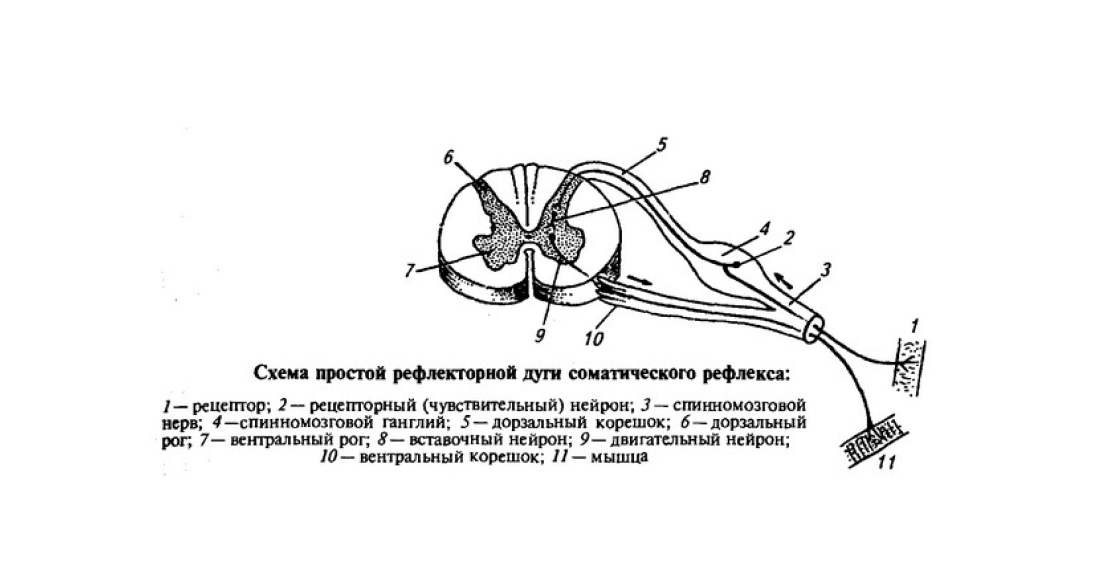
BAS (biologically active substances) regulate cells by means of special cell-membrane receptors. BAS also modulate regulatory influences, as they change cellular sensitivity to nervous and hormonal influences by changing the number of cell receptors and their similarity to different information-carrying molecules. BAS, formed in different tissues, affect autocrine and paracrine, but are able to penetrate into the blood and act systemically. Some of them (kinins) are formed from precursors in plasma blood, so these substances, when acting locally, even cause a widespread hormone-like result. Physiological adjustment of the body functions is carried out by the coherent interaction of the NS and humoral system. Nervous regulation and humoral regulation carry out the unification of the functions of the organism for its full functionality, and the human organism works as one whole. The interaction of the human organism with external environmental conditions is carried out with the help of active NS, the efficiency of which is determined by reflexes.
Send us a message