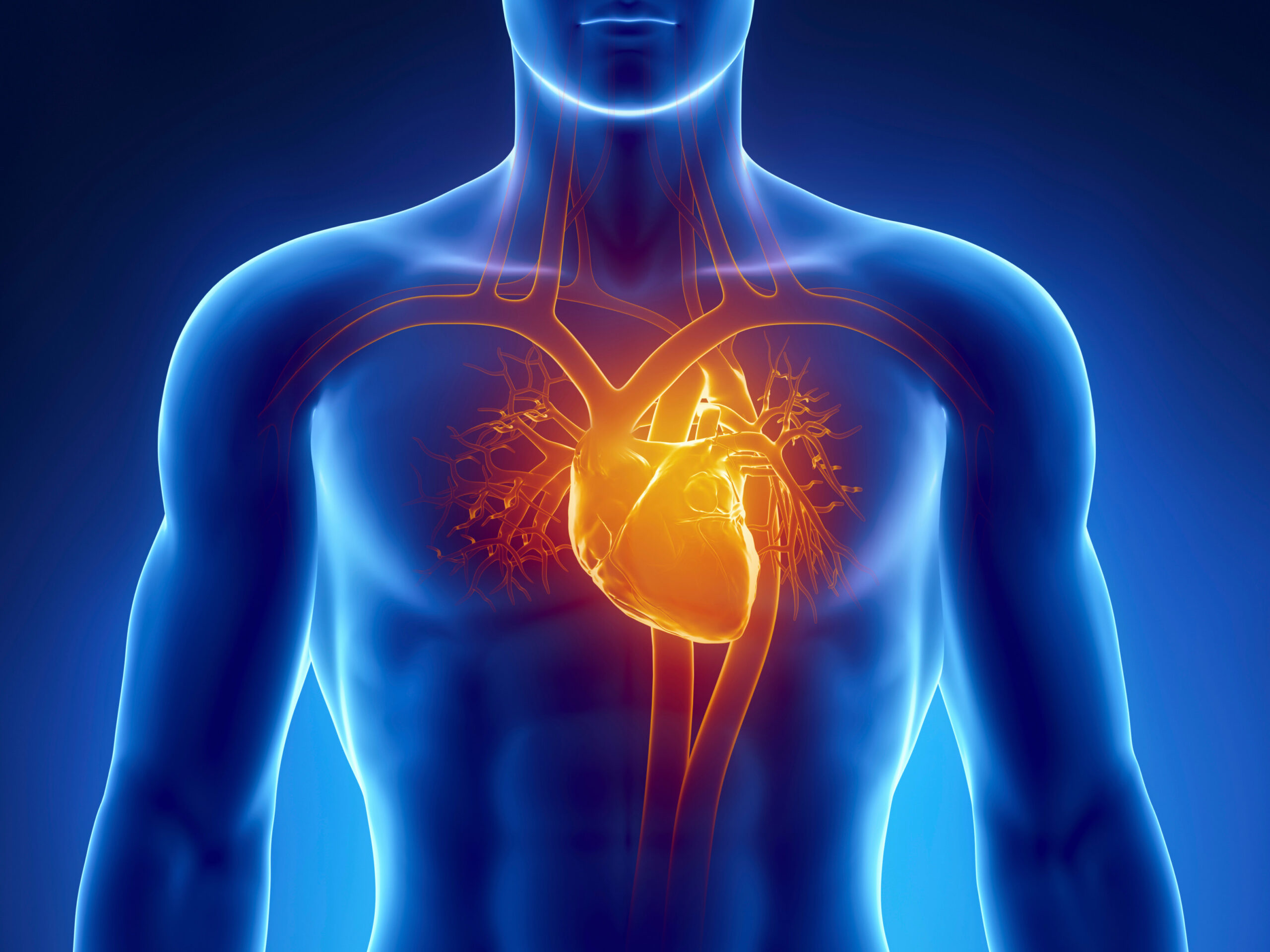
The fetus’s heart begins to beat at the end of the first month, and its last beat marks the end of life. Between these points, the human heart manages, on average, to contract about 2.5 billion times, pump about 6 million liters of blood, resting only between beats: it has been established that over the course of 70 years of life, the sum of heart pauses is about 20 years. Of all the muscles in the body, the heart does the most work: nevertheless, scientists believe that its potential should be enough for at least 150 years of life.
Don’t miss the most important science and health updates!
Subscribe to our newsletter and get the most important news straight to your inbox
Nine ways to improve your heart health
Heart and vascular diseases are the leading cause of death worldwide. Doctors cite constant stress, physical inactivity, obesity, bad habits, and poor ecology as factors that worsen the performance of our invaluable motor. So how can we support the work of the heart, allowing it to maximize its potential, designed for a hundred and fifty years?
1. Physical activity
The heart is a muscle that needs to be constantly trained.: this helps it to be saturated with oxygen and nutrients, and also “trains” it to expel more blood for each contraction. Aerobic exercise is especially beneficial for the heart: walking, running, cycling, swimming – it is not by chance that they are also called cardio exercises.
Professional athletes, such as cyclists, develop physiological bradycardia: the pulse rate sometimes drops to 30 beats per minute. This mode allows the heart muscle to rest more, its resources are consumed more slowly, creating the prerequisites for a long life. A trained heart works optimally even at rest, expelling up to 80 ml of blood with each contraction: almost 1.5 times more than those who neglect physical education (50-60 ml).
At the same time, it is not necessary to overload the heart dramatically: it is necessary to take into account age, the presence of concomitant diseases, the condition of the joints, etc. The best cardio exercise options are jogging 3-4 times a week for 20-30 minutes or daily walking at a fast pace for 30-40 minutes. As an additional load, you can add swimming lessons twice a week for 45-60 minutes.
2. Nutrition for the heart
The heart is a muscle, so to maintain its health, the diet should include proteins, both plant and animal. Fatty fish and vegetable oils are recommended as a source of healthy fats for the heart. Fruits and vegetables are preferred from carbohydrates. Foods with an excess of saturated fats (sausages, sausages, hamburgers, etc.) and sugary carbonated drinks have a bad effect on heart health.
Studies show that the Mediterranean diet has the best effect on heart and vascular health: it is dominated by fruits and vegetables, fish and a small amount of poultry meat, as well as olive oil. Scientists call breakfast the most useful meal for the heart. For example, in a study involving over 6,000 men conducted in the United States, it turned out that neglecting breakfast increases the risk of developing cardiovascular diseases and death from them.
Another study conducted in Brazil showed that among patients who were hospitalized with heart attacks, 58% regularly skipped breakfast, and 51% had a very late dinner. Thus, scientists call a hearty breakfast, a moderately high-calorie lunch and a light dinner no later than 3-4 hours before bedtime the optimal diet for the heart.
3. The fight against excess weight
Obesity is one of the most serious risk factors for developing heart and vascular diseases. Scientists from Oxford have found that with an increase in body mass index (the ratio of body weight and height) by only 4 points, the heart becomes heavier by 8 g, and its volume increases by 5%. The fact is that with obesity, the total volume of blood increases, as well as the volume of the vascular bed due to new capillaries penetrating the adipose tissue. Thus, an additional burden is placed on the heart.
The more a person gains extra pounds, the bigger and heavier his heart becomes. Cardiomyocytes (muscle cells of the heart) begin to experience a lack of oxygen and nutrition, which leads to impaired blood supply to the myocardium and heart attacks. Overstretching of muscle cells leads to a decrease in cardiac output – heart failure develops, which causes all body cells to “starve”.
Other causes that disrupt the functioning of the heart in obesity include changes in blood vessels, hormonal imbalance, myocardial fatty degeneration (heart obesity), etc. Therefore, in order to keep your heart healthy, it is important to monitor your weight: nutrition and exercise help in this.
4. A positive outlook on life
The hearts of optimists are healthier than those of people with predominant negative attitudes: this has been proven by many studies. For example, Harvard scientists observed a group of 70,000 middle-aged and older women for eight years. It turned out that optimistic women developed heart disease 38% less often than pessimistic women. Another study conducted in North Carolina showed that people with positive attitudes have a much higher chance of living another 11 years after suffering a heart attack.
Scientists believe that setting goals that can actually be achieved in a certain period of time, communicating with positive people, contemplating beautiful nature and works of art, listening to your favorite music helps to develop optimism. It is important to learn to enjoy the little things – a sunny day, delicious and healthy food, communication with loved ones. Sports activities also help to consistently improve mood – they contribute to the production of endorphin neuropeptides, and achieving even small results is “reinforced” by the release of dopamine, the neurotransmitter of winners.
5. Giving up bad habits
Tobacco smoking and alcohol are factors leading to rapid heart “wear”. Nicotine and other products contained in tobacco lead to vasospasm, increased blood pressure, as a result of which the heart is forced to work with increased intensity. Spasm of the coronary vessels feeding the heart is the cause of oxygen starvation of cardiomyocytes, which increases the risk of angina pectoris and heart attacks. Studies show that in “heavy” smokers, the heart makes 10-12 thousand times more contractions per day than in a non-smoker, quickly exhausting its natural potential.
The effect of alcohol on the heart, according to doctors, depends on its dosage. Thus, regular consumption of doses exceeding 30-60 ml. of strong drinks, 120-200 ml. of wine per day, gradually leads to the development of alcoholic cardiomyopathy. In this condition, the synthesis of cardiac proteins worsens, the heart rhythm is disrupted, hormonal imbalance occurs, the immune system suffers, which leads to inflammation of the myocardium and endocardium – the inner lining of the heart.
6. Sleep – how much sleep is good for heart health?
Studies show that chronic sleep deprivation (a night’s sleep lasting less than 8 hours) increases the risk of coronary heart disease by 1.5-2 times, and the likelihood of heart failure increases by 55%. Scientists from the University of Colorado (USA) have found that when a night’s sleep lasts less than 7 hours, the level of three proteins (micro-RNA) involved in regulating the activity of genes responsible for vascular health decreases. Another American study showed that men who sleep for 6 hours or less worsen the condition of the endothelial cells lining the walls of blood vessels, which causes the latter to lose their ability to expand and contract in response to physiological signals.
Daytime sleep is good for your health, especially in old age. Observation of two hundred volunteers, whose average age was 62 years, showed that daytime sleep, even lasting only 20 minutes, allows you to maintain normal blood pressure, and also reduces the risk of heart attack by 10%.
At the same time, excess sleep is also bad for the heart. An international group of scientists conducted a study involving over 116 thousand people. It turned out that sleeping for more than 8 hours a day increases the risk of death from heart disease by 5%, and those who regularly sleep for more than 10 hours are 41% more likely to die prematurely.
7. Love, companionship, and pets
The more a person is “involved” in life, the more communication, meetings and useful things for society they have, the healthier their heart is. At the same time, the lack of social contacts and support, low involvement in public life, is one of the significant factors in the development of heart disease. For example, a study conducted in Denmark showed that social isolation increases the risk of death from heart disease by 60-70%, and among the negative social factors, the most significant was the absence of a partner.
After analyzing data from 73 studies conducted in the United States, which involved over 180,000 people, scientists found that single people have a 32% higher risk of stroke and a 29% higher chance of dying from heart disease than those who were in a relationship and were socially active. And experts from Harvard have found that the lack of friendly communication increases the level of a protein involved in the formation of blood clots by 20%, which increases the likelihood of heart attacks and strokes.
For the prevention of heart disease, communication is useful not only with people, but also with animals. Scientists from the University of Washington have proven that even 10 minutes of communication with a pet significantly reduces the level of stress hormones. And a study conducted at Uppsala University (Sweden) showed that dog owners have the lowest risk of developing heart disease and the likelihood of death from them. Communication with the dog helps to alleviate stress, not to feel loneliness and social isolation. The most “preventive” were pets of hunting breeds (hounds, retrievers, terriers, etc.), which, according to scientists, is due to their increased activity, forcing the owners to walk more often and move more on walks.
8. Sexual relations
Sexual relations are both a form of intimate communication, physical activity, and a way to experience positive emotions. Therefore, it is not surprising that sex is good for the heart. This was demonstrated by a study involving more than 2,000 elderly women and men conducted at the University of Michigan. It turned out that men who have sex once a month are significantly less likely to experience heart problems than men with lower sexual activity. At the same time, more frequent sex had no effect on heart health.
The study also showed that the emotional component and the quality of sex for men did not play a serious role, moreover, those who considered their intimate experience very good were more likely to experience heart disease than those who rated it neutrally. The opposite pattern was observed in women: the frequency of sex had no effect on heart health. But the level of pleasure gained during intimacy was directly related to a low risk of developing heart and vascular diseases.
A similar study conducted at the University of Massachusetts found that men who have sex less than once a month have a 45% higher risk of developing heart disease. Experts believe that a man’s ability to have sex can be considered as a marker of health in general and the state of the cardiovascular system in particular.
9. Meditation and Mindfulness
Scientists from the Medical College of Wisconsin, together with specialists from Maharishi University of Iowa, investigated the effects of meditation on heart and vascular health. For nine years, doctors monitored a group of more than two hundred people (average age 59 years) predisposed to the development of atherosclerosis. Part of the group of volunteers practiced meditation daily, while the other part underwent standard therapy. It turned out that the “meditating participants” improved the condition of blood vessels by 48%, and the volunteers from the second group by 24%. In another study, researchers from the University of Sydney (Australia) found that 10 days of mindfulness practice had a positive effect on heart rate variability. This is one of the most important criteria, the assessment of which makes it possible to predict the risk of developing heart disease.
Representatives of the American Heart Association believe that meditation can be used as prevention and concomitant therapy of heart diseases. It helps to reduce the level of stress hormones and normalize blood pressure. Mindfulness practices also help to see more positive aspects in life, contribute to the formation of an optimistic attitude and increase the likelihood of adherence to a healthy lifestyle.