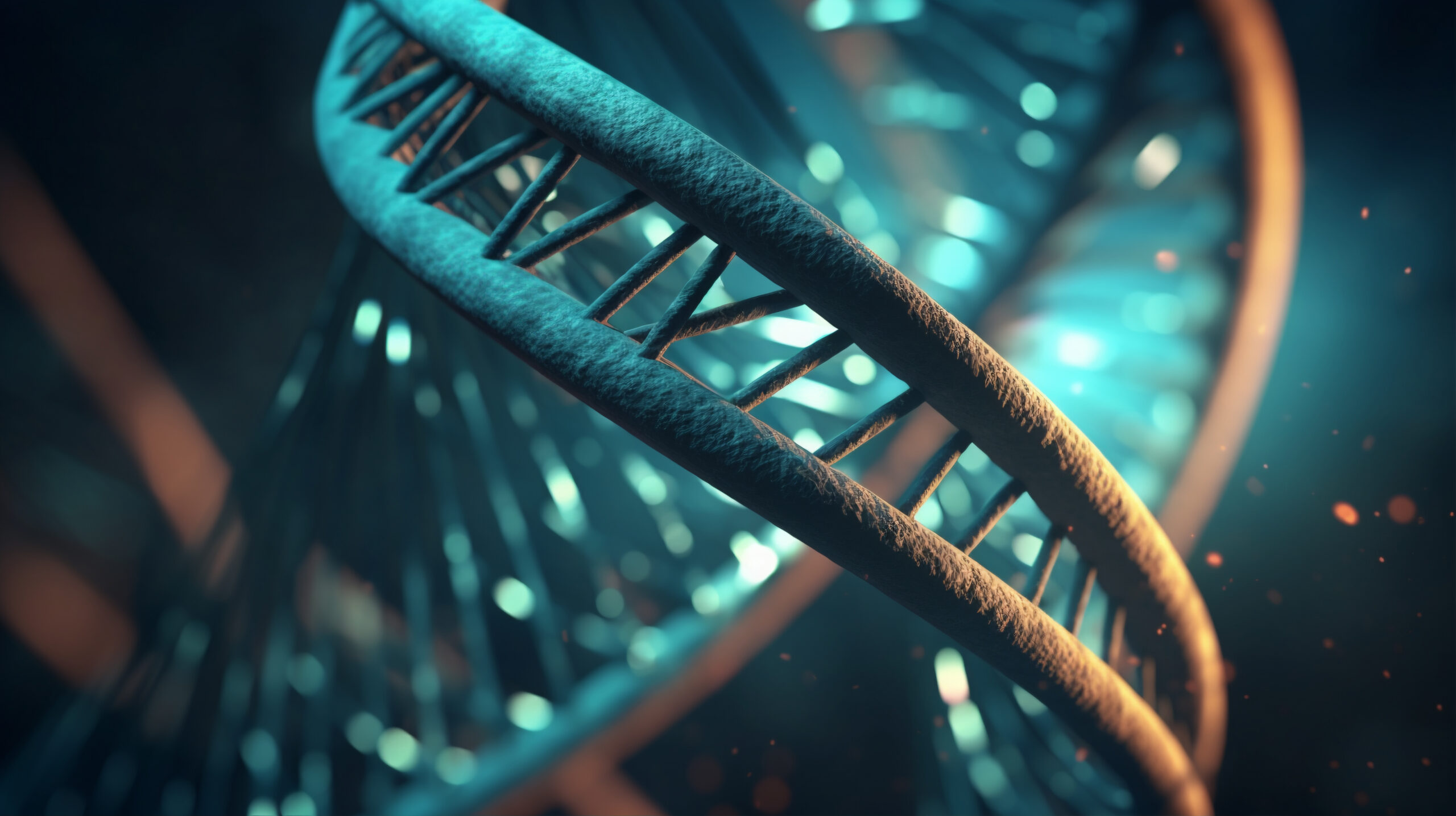
Epigenetics is a fairly young branch of modern science, and so far it is not as widely known as its “sister” genetics. In Greek, the preposition “epi-” means “over”, “above”, “over”. If genetics studies the processes that lead to changes in our genes, in DNA, then epigenetics studies changes in gene activity in which the DNA structure remains the same. One can imagine that a certain “commander” in response to external stimuli, such as nutrition, emotional stress, and physical exertion, gives orders to our genes to strengthen or, conversely, weaken their activity.
Don’t miss the most important science and health updates!
Subscribe to our newsletter and get the most important news straight to your inbox
Mutation management
The development of epigenetics as a separate field of molecular biology began in the 1940s. Then the English geneticist Conrad Waddington formulated the concept of the “epigenetic landscape”, explaining the process of organism formation. For a long time, it was believed that epigenetic transformations are characteristic only of the initial stage of the body’s development and are not observed in adulthood. However, in recent years, a whole series of experimental evidence has been obtained, which has produced a bombshell effect in biology and genetics.
The revolution in the genetic worldview took place at the very end of the last century. A number of experimental data were obtained in several laboratories at once, which made geneticists think hard. So, in 1998, Swiss researchers led by Renato Paro from the University of Basel conducted experiments with fruit flies, which had yellow eye color due to mutations. It was found that under the influence of increased temperature in mutant fruit flies, offspring were born not with yellow, but with red (as is normal) eyes. They activated one chromosomal element, which changed the color of their eyes.
To the surprise of the researchers, the red eye color persisted in the descendants of these flies for another four generations, although they were no longer exposed to heat. That is, the inheritance of acquired traits has occurred. Scientists were forced to make a sensational conclusion: stress-induced epigenetic changes that did not affect the genome itself can be fixed and passed on to the next generations.
But maybe this only happens in fruit flies? Not only. Later it became clear that the influence of epigenetic mechanisms also plays a very important role in humans. For example, it has been found that the predisposition of adults to type 2 diabetes may largely depend on the month of their birth. And this is despite the fact that 50-60 years pass between the influence of certain factors related to the time of year and the onset of the disease itself. This is a good example of so-called epigenetic programming.
What could possibly link a predisposition to diabetes and a date of birth? New Zealand scientists Peter Gluckman and Mark Hanson have managed to formulate a logical explanation for this paradox. They proposed the “mismatch hypothesis,” according to which a developing organism can undergo “predictive” adaptation to the living conditions expected after birth. If the prognosis is confirmed, it increases the body’s chances of survival in the world where it has to live. If not, adaptation becomes maladaptation, that is, a disease.
For example, if the fetus receives insufficient food during intrauterine development, metabolic changes occur in it, aimed at storing food resources for the future, “for a rainy day.” If there is really little food after birth, it helps the body to survive. If the world that a person enters after birth turns out to be more prosperous than predicted, such a “hoarding” nature of metabolism can lead to obesity and type 2 diabetes in the later stages of life.
The experiments conducted in 2003 by American scientists from Duke University Randy Girtle and Robert Waterland have already become textbook. A few years earlier, Girtle had managed to insert an artificial gene into ordinary mice, causing them to be born yellow, fat, and sickly. Having created such mice, Girtle and his colleagues decided to test whether it was possible to make them normal without removing the defective gene. It turned out that it was possible: they added folic acid, vitamin B12, choline and methionine to the feed of pregnant agouti mice (as the yellow mouse “monsters” became known), and as a result, normal offspring appeared. Nutritional factors proved to be able to neutralize mutations in the genes. Moreover, the effects of the diet persisted in several subsequent generations: the cubs of agouti mice, born normal due to dietary supplements, themselves gave birth to normal mice, although their diet was already normal.
It is safe to say that the period of pregnancy and the first months of life is the most important in the life of all mammals, including humans. As the German neuroscientist Peter Spork aptly put it, “in old age, our health is sometimes much more strongly influenced by our mother’s diet during pregnancy than food at the current moment of life.”
Genes are not a sentence
Along with stress and malnutrition, fetal health can be affected by numerous substances that distort the normal processes of hormonal regulation. They are called “endocrine disruptors” (disruptors). These substances, as a rule, are artificial in nature: humanity obtains them industrially for its needs.
Perhaps the most striking and negative example is bisphenol—A, which has been used for many years as a hardener in the manufacture of plastic products. It is found in some types of plastic containers, such as water and beverage bottles and food containers.
The negative effect of bisphenol-A on the body lies in its ability to “destroy” free methyl groups necessary for methylation and suppress the enzymes that attach these groups to DNA. Biologists from Harvard Medical School have discovered the ability of bisphenol-A to inhibit egg maturation and thus lead to infertility. Their colleagues at Columbia University have discovered the ability of bisphenol-A to erase differences between the sexes and stimulate the birth of offspring with homosexual tendencies. Under the influence of bisphenol, the normal methylation of genes encoding receptors for estrogens, female sex hormones, was disrupted. Because of this, male mice were born with a “feminine” character, docile and calm.
Fortunately, there are products that have a positive effect on the epigenome. For example, regular consumption of green tea can reduce the risk of cancer, since it contains a certain substance (epigallocatechin-3-gallate), which can activate tumor suppressor genes (suppressors) by demethylating their DNA. In recent years, genistein, a modulator of epigenetic processes found in soy products, has become popular. Many researchers associate the soy content in the diet of Asian residents with their lower susceptibility to certain age-related diseases.
Studying epigenetic mechanisms has helped us understand an important truth: a lot of things in life depend on ourselves. Unlike relatively stable genetic information, epigenetic “tags” can be reversible under certain conditions. This fact allows us to rely on fundamentally new methods of combating common diseases based on the elimination of those epigenetic modifications that have arisen in humans under the influence of adverse factors. The use of approaches aimed at correcting the epigenome opens up great prospects for us.
Source: Alexey Rzheshevsky, Alexander Vaiserman, “Popular Mechanics” No. 2, 2015.