The Neural Doctrine

Modern neuroscience is based primarily on the idea of the brain as a community of cells. The human brain contains an amazing number of neurons — from 80 to 120 billion, they form intricately intertwined systems in which information is processed. Neurons (nerve cells), one of the two types of brain cells, produce electrical signals and interact with each other.
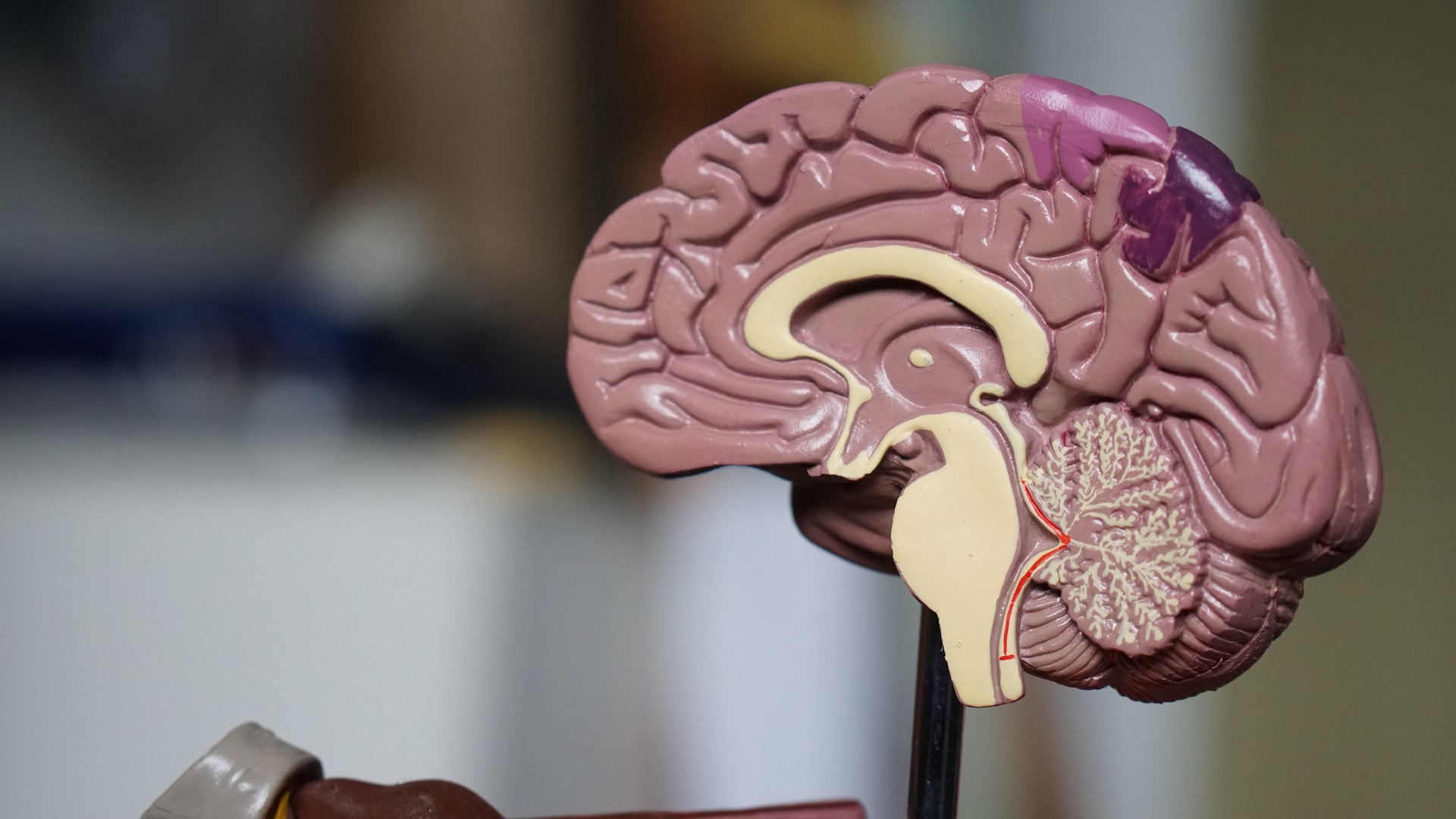
The Neural Doctrine
In the 1830s, two German scientists proposed a theory that claimed that all living things are made up of cells. In those days, microscopes lacked the power to reveal the structure of the nervous system in sufficient detail, and therefore it remained unclear whether cellular theory applied to nervous tissue; this topic was still controversial for a long time. Some researchers believed that the nervous system, like the rest of the body, should consist of cells, while others believed that it was a continuous network of tissue. The improvement of microscopes and methods of chemical color reactions allowed scientists to examine the nervous tissue in more detail. A significant breakthrough was the so—called “black reaction” proposed by Camillo Golgi, a method of staining and curing fabric using solutions of potassium and ammonium bichromate, followed by immersion in a solution of silver nitrate. The “black reaction” completely colors a random small number of neurons in a tissue sample, making their outlines fully visible. In the 1880s, Spanish neuroanatomist Santiago Ramon y Cajal began using the staining method in the comparative study of tissues of many brain regions in various animal species. Cajal improved Golgi’s technique by repeated treatment with solutions. Now it was possible to color the neurons deeper and study them in even more detail. Cajal concluded that the brain is undoubtedly made up of cells, and at the 1889 conference, everyone else was convinced of this, and so the neural doctrine was born — the idea of the neuron as the basic structural and functional unit of the nervous system. In 1906, Cajal and Golgi received the Nobel Prize in Physiology for their contributions to science. Despite the fact that the method he invented led to the discovery of the neuron, Golgi, paradoxically, continued to adhere to the idea of the nervous system as a continuous network of tissue. Cajal, on the other hand, is generally considered the father of modern neuroscience.

Don’t miss the most important science and health updates!

Subscribe to our newsletter and get the most important news straight to your inbox

Messengers of the Body

The human brain contains neurons of at least several hundred or even thousands of varieties, of all possible shapes and sizes, but they can all be divided into three types according to their functions. Sensory organs transmit information from the sensory organs to the brain; motor organs send commands to muscles and organs; insertion (associative) are responsible for communication between neurons in localized nerve circuits and over long distances — between 2 different parts of the brain. Despite this amazing diversity, the basic properties of most neurons are the same. Traditionally, the structure of a neuron is represented by three parts, each part has its own functions. The dendrite. The name comes from the Greek “dendron” — a tree; it is a branched outgrowth of the cell body. The dendrite is a segment of a neuron responsible for “data entry”: it receives and processes signals from other neurons, after which it transmits them to the cellular body. The cellular body. In this compartment, the signals coming from the dendrite are processed and the outgoing signal is produced. The cell nucleus is also located here, and in it is DNA, a long molecule that stores information for the synthesis of thousands of proteins that control cell functions. Each type of neuron is determined by a unique combination of genes that give it its special properties. The axon. A single process at the other end of the neuron, the conductor of the outgoing signal of the neuron. Electrical signals are generated at the base of the axon and diverted from the cell body, after which they are transmitted to other cells. The end of the axon forms branched terminals, which carry the signal to a multitude of “target” cells. We already know, however, that impulses can originate in any part of a neuron and move in both directions.

A well-trained army

Most of the neurons — about 80% — are located in the cerebellum. The cells in its cortex (outer shell) are arranged in highly ordered layers, like disciplined soldiers in special forces. The two types of cells in this part of the brain clearly show how diverse neurons can be. Purkinje cells are the largest neurons in the brain. They are wide, flat, and extremely branched. Granular cells, on the other hand, are the smallest. In them, a single fiber near the cell body bifurcates and branches off perpendicular to the dendrites of the Purkinje cell. Each Purkinje cell forms connections with about 250,000 fibers of granular cells. The cerebral cortex is also layered, and each layer is an extremely ordered community of neurons. Pyramidal cells, located in all layers except the uppermost one, are one of the main types of cells, they are assembled into clusters of a certain device, reproduced on every thirty thousandth of a millimeter. The structure of these cells varies in different layers and areas of the brain, but they all have a recognizable pyramidal shape of the cell body, highly branched dendrites and branched axons extending to cells in other layers of the cortex and remote areas of the brain. Author: Moheb Kostandi

Published

June, 2024

Duration of reading

About 3-4 minutes

Category

The brain and nervous system

Share

Send us a message