Neuroscientist Moheb Kostandi on neuroplasticity
Recently, neuroscience has made impressive strides in understanding the mechanisms of brain functioning, presenting the scientific community with many new concepts and promising results, of which the phenomenon of neuroplasticity is of the greatest interest.
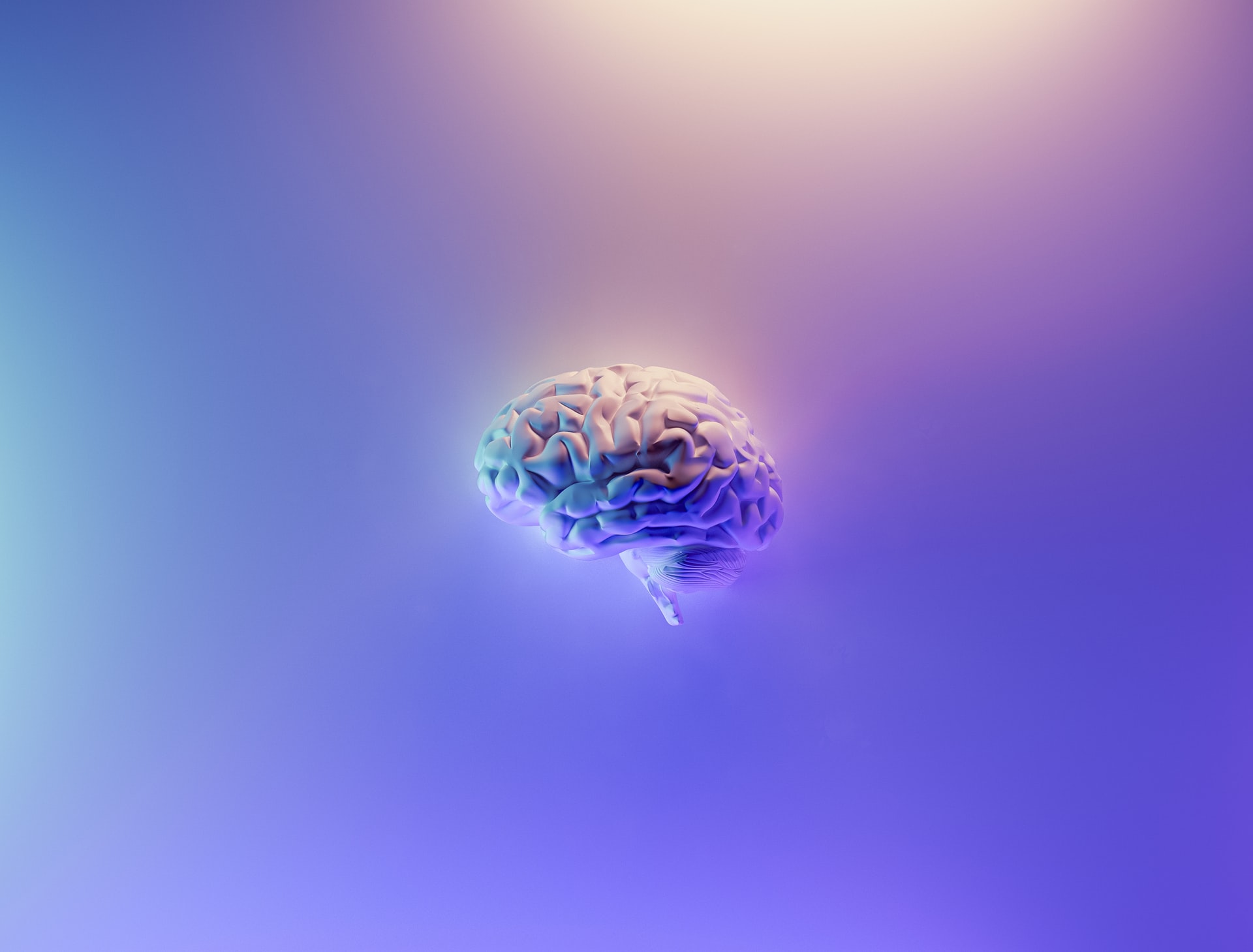
Sixty years ago, the idea that nervous tissue can change was anathema in neuroscience. It was generally accepted that the adult human brain has a fixed structure, and therefore, “you can’t teach an old dog new tricks.” Since then, this dogma has been refuted by many studies that have shown that the brain not only can, but also constantly, throughout life, changes in one way or another, reacting to everything we do, to every experience we receive.
Neuroplasticity is a collective term for many different mechanisms of nervous system variability. This term is not precisely defined by neuroscientists, who use it to describe various aspects of the phenomenon under study. This concept is often misunderstood among the general public; misconceptions about what neuroplasticity is and what its capabilities are are widespread.
If you type the query “brain programming” into Google, a list of the most popular phrases corresponding to this query will appear. If you believe the search results, you can program your brain for love and happiness, for success at work, and even for the search for meaning in life. Next is more: developing positive thinking and self—confidence, improving sleep and getting rid of procrastination. They write on the Internet that you can improve almost any aspect of your behavior and transform your life if you reprogram your brain.
But what does it mean to “reprogram the brain”? It’s about the concept of neuroplasticity. Neuroplasticity is a very loosely defined term meaning one of the mechanisms of nervous system variability. Just 60 years ago, the idea that an adult’s brain could change in any way was considered heresy. The researchers believed that only a child’s brain could change, which gradually solidified like wet clay in the air, acquiring a permanently fixed structure by the end of childhood. It was also believed that we are born with a constant number of brain cells and the brain cannot regenerate, which means that any damage to it cannot be repaired.
In fact, all this is far from the truth. The adult brain can not only transform, but also constantly, throughout life, it changes in one way or another, reacting to everything we do, to every experience we receive. In the process of evolution, the nervous system has been able to adapt to external conditions and determine the best course of action in any given situation, based on what our experience teaches us. This is true not only for humans, but also for all organisms with nervous systems. Evolving, the nervous system has gained variability; and neuroplasticity is an inherent property of all nervous systems.
Therefore, the concept of neuroplasticity runs like a red thread through all areas of brain research, and neuroscientists have to take into account the fact that any experiment leads to some changes in the nervous system of the organism being studied. Different researchers define neuroplasticity in different ways, depending on which aspect of the brain and behavior they are studying. The term is so obscure that it makes little sense when used out of context and without explaining exactly what changes are taking place. Nevertheless, the idea that we can change our brains at will in order to change ourselves turned out to be very attractive and captured the public’s imagination.
Today, neuroplasticity is a popular word that can be heard anywhere. The phrase “reprogram your brain” has become a mantra of motivational speakers and personal growth gurus, and theoretical educators and business managers have adopted the concept of brain variability in an attempt to improve learning and leadership skills. However, in these contexts, there is usually no clear definition of neuroplasticity and there are enough misconceptions. Some attribute miraculous healing powers to her, others try to associate her with New Age psychotherapy, but all this is often exaggerated, and sometimes completely unfounded.
Don’t miss the most important science and health updates!
Subscribe to our newsletter and get the most important news straight to your inbox
A brief history of the study of neuroplasticity
Neuroplasticity is often described as a revolutionary new discovery, but this concept has been known in one form or another for over 200 years. In the early 1780s, Swiss naturalist Charles Bonnet and Italian anatomist Michele Vincenzo Malacarne discussed in correspondence the possibility of developing the brain through mental exercise and proposed various ways to experimentally test this idea. Malacarne conducted an experiment using a pair of dogs from the same litter and a pair of birds from the same clutch of eggs. He intensively trained one animal from each pair for several years, after which he studied their brains and stated that the cerebellum of trained animals was much larger than that of untrained ones.
Soon after, in 1791, an important work on anatomy was published, in which the German physiologist Samuel Thomas von Sommerring put forward the following idea: “Can the application and strain of the introduction of 5 mental abilities gradually change the physical structure of the brain, just as muscles become stronger from hard work, is the skin getting rougher? This is not implausible, although it cannot be easily demonstrated with a scalpel.”
At the beginning of the 19th century, Johann Spurzheim, one of the founders of phrenology, suggested that the development of mental abilities and related brain structures could be stimulated by exercise and learning. Jean-Baptiste Lamarck, an opponent of Charles Darwin, who argued that evolution occurs by inheriting acquired characteristics, believed that specialized areas of the brain develop with the proper use of their associated abilities.
In the 1830s, physiologist Theodore Schwann and botanist Matthias Schleiden developed a cellular theory according to which cells are the basic structural elements of all living organisms. However, microscopes at that time were not powerful enough and did not allow for a detailed examination of the nervous tissue. It was unclear whether cellular theory applied to the nervous system, and throughout the 19th century there were debates about the structure of the brain and spinal cord. Researchers have divided into two camps: neuronists, who believe that the nervous system, like all living things, should consist of cells, and reticularists, who believe that it consists of a continuous fiber.
The controversy subsided in the 1890s thanks to the work of the Spanish neuroanatomist Santiago Ramon y Cajal. Using more advanced microscopes and new staining techniques, Cajal studied and compared the nervous tissue of representatives of various biological species, including humans, and, being a skilled artist, presented his observations in the form of beautiful drawings. Thanks to the work of Cajal and other researchers, enough evidence has been obtained to convince the scientific community that nervous tissue consists of cells (neurons) that form connections with each other. Today, Cajal is considered the founding father of modern neuroscience as a separate discipline.
Darwin reflected on neuroplasticity in The Origin of Man, published in 1874. “I have shown that the brain of a domestic rabbit has significantly decreased compared to the brain of a wild rabbit or hare,” he wrote. “This may be due to the fact that for many generations rabbits were kept in a confined space and used very little intelligence, instincts, feelings and motor system.”
The term “plasticity” first appeared in 1890 in the book “Principles of Psychology” written by William James. James defines plasticity as “having a structure weak enough to be influenced, but strong enough not to change all at once” and explains the acquisition of habits by strengthening synapses and forming new connections: “If habits arise due to the malleability of brain matter to external influences, then we can immediately see under what external influences the brain is changing., if it changes at all… The cerebral cortex is so susceptible because of the infinitely weak impulses passing through the sensory nerve roots. The impulses received at the entrance must find an exit. When they leave, they leave footprints on the paths they follow. In short, the only thing they can do is strengthen the old ways or pave new ones.”
In 1894, Cajal suggested that plasticity is provided by connections between nerve cells, and mental exercises lead to the appearance of new outgrowths of nervous tissue. “The theory of free branching of cellular processes capable of growing seems not only very plausible, but also very encouraging,— he said at a presentation to the Royal Society of London. — A continuous, pre-formed network, similar to a telegraph system without the possibility of creating new stations and new lines, would be rigid and unchangeable, which contradicts our idea that a thinking organ can change within certain limits… especially during the development of the body… The bark of the major hemispheres is like a garden with countless trees — pyramidal cells — which, with proper care, can increase the number of branches and take root deeper, producing fruits and flowers of various shapes and qualities.”
Three years later, British neuroscientist Charles Sherrington called these connections “synapses,” from the Greek words συν—”together” andἅπτειν—”to connect,” and stated that synapses are probably the nodes responsible for learning. He spoke about the strengthening of synaptic connections as follows: “Deprived of any possibilities of self-reproduction, a nerve cell directs its internal energy to expand connections with other similar cells in response to events that excite it.”
Other scientists have questioned the claim that learning can lead to the appearance of new branches of nervous tissue, citing as proof the fact that there are much fewer differences in brain size than in the size of other organs, and the volume of the brain, apparently, remains unchanged most of life. Anticipating these objections, Cajal suggested that there is a “mutual decrease in cell bodies or a reduction in other areas whose functions are not directly related to mental abilities.”
However, less than ten years later, Cajal changed his mind. In 1913, he wrote in the book “Degeneration and Regeneration of the nervous system” the following: “When the developmental period ends, the source of axon and dendrite growth runs out irrevocably. In the centers of an adult, the neural pathways are constant and unchanging. Everything dies, nothing regenerates.” This view quickly became one of the main tenets of neuroscience, and researchers came to the general conclusion that learning, training, and experience do not affect the physical structure of the brain.
A Revolution in modern neuroscience
This dogma remained unshakeable until the middle of the 20th century. However, in the early 1960s, physiologists David Hubel and Torsten Wiesel made a number of important discoveries related to the influence of sensory experience on the developing brain, and neuroscientist Paul Bach‑y-Rita used “sensory substitution” equipment that allows blind people can “see” through the sense of touch, to prove that the adult brain does not have a fixed structure. Several other researchers reported observations of the birth of new cells in the brains of adult animals of various species, but they were mostly ignored or ridiculed.
In 1973 Tim Bliss and Terje Lomo reported the discovery of long—term potentiation, a physiological mechanism for long-term strengthening of synaptic connections. This was the next step towards a breakthrough in this field. Today, synaptic plasticity is widely considered as the basis of the cellular mechanism of learning and memory, therefore, long-term potentiation is the most studied and well-understood form of neuroplasticity. Since its discovery, researchers have learned a lot about the molecular mechanisms underlying long-term potentiation and related processes. But, oddly enough, this tells us little about how learning and memory can be improved.
In the late 1990s, with the discovery of neural stem cells in the adult brain, more clear evidence of neuroplasticity emerged. This has influenced the scientific community more than anything before. The consensus has changed again, and neuroplasticity has been hailed as a revolutionary new discovery that has turned all our ideas about the brain upside down. Today, neuroscientists armed with the latest technology can visualize the brain with unprecedented detail and manipulate neural activity with great precision. New opportunities have allowed us to discover many other types of neuroplasticity and understand some of the mechanisms underlying them.
Neuroplasticity in one form or another is found at all levels of the nervous system organization, whether it is the lowest molecular activity, structures and functions of individual cells, intermediate levels of discrete populations of neurons and distributed neural networks, or the highest levels of systems covering the entire brain and determining its behavior. Some forms operate throughout life, others only during certain periods; some function separately, others together.
To summarize, there are two main types of neuroplasticity. Functional plasticity affects some physiological aspects of the functioning of a nerve cell, such as the frequency of nerve impulses and the likelihood of emitting a chemical signal (both can strengthen or weaken synaptic connections), and changes in the degree of synchronicity of cell populations. Structural plasticity includes changes in the volume of individual brain regions and the formation of new neural pathways, which may be caused by the formation of new nerve tissue and synapses or the growth and development of new cells.
The changes associated with different types of plasticity may have different durations. Synapses can change in milliseconds; the creation or destruction of dendritic processes and synapses takes several hours; cells are born and die in a few days. Other forms of neuroplasticity require even more time: for example, growing up in the brain involves a long period of increased plasticity that persists from late childhood to early adulthood, and loss of vision or hearing can occur as a result of gradual changes that accumulate over weeks, months, and years.
Source: Moheb Kostandi “The human brain. 50 ideas to know about”
Published
June, 2024
Duration of reading
About 5-6 minutes
Category
The brain and nervous system
Share

